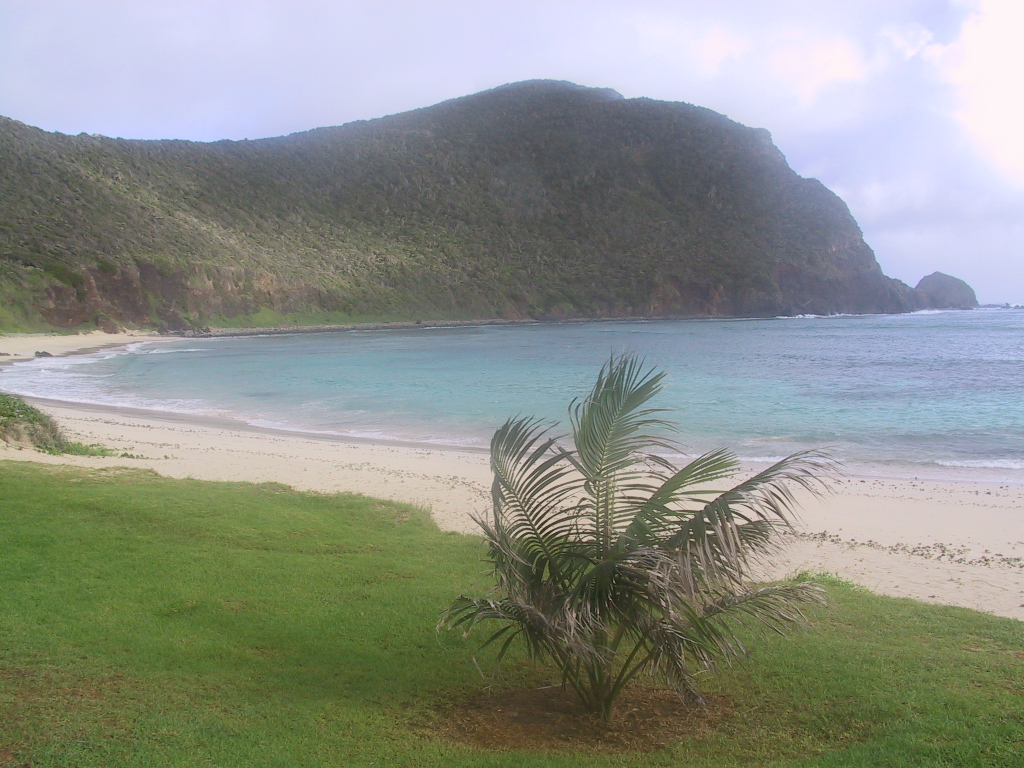
This time last year I was living in the New South Wales town of Newcastle - a really nice place! We moved there after 28 years living in the same house in suburban Sydney. We were not there for long - just a couple of years, but it made a lasting impression on us, and we're sure we will return one day.
During the last week or so we were there, I enjoyed taking part in Walk 4 Water - a great way to explore the local area, while taking time to think about how easily we take for granted some of our most fundamental privileges.
As I did the walk last year, I kept a bit of a journal - I hope you take a moment to read it. If you helped with a donation last year, you will know what it's all about. If not - please click on the link below - you know you will want to!
Walk 4 Water 2014
Here's what I said in 2013 - I'm sure I'll have more to say this year - the message will be the same - and your contribution equally appreciated!
WALK 4 WATER 2013
For those who haven’t been following, I have been on a five day mission to take ten thousand steps each day to raise money and awareness for Walk 4 Water. Why ten thousand? Well that’s about how far the average people, mostly women or children walk every day in the developing world to access water so that they can continue to exist. My little effort is nearly over, but the work of WaterAid continues. Thanks to all of you who have contributed so far - you made sure I achieved and beat my goal and with a little more we can do even better. One of my contributors thinks it's a good job that I'm not asking you to pay by the word - I'll leave you, dear Reader to be the judge of that! Day Five was a bit of a mixed bag as you'll see below - meanwhile please remember what a difference it would make if I could just get just $5 from each person who reads this - and here is the place to do it - WALK 4 WATER
Day 1
Today was Day One of my five days of Walk for Water.
So while my daughter Kathleen is doing her bit for Mencap on the other side of the world as she prepares for the London Marathon next month, my pathetic little contribution will be to walk each day for the next five days the same distance that the average people walk every day for water in the developing world.
I was in Sydney for a couple of days, so I thought I would start out with a brisk stroll around Darling Harbour - then down to the fish markets at Pyrmont, across the Anzac Bridge and back to Darling Harbour where I was able to indulge one of my favourite passions which is wandering around the Maritime Museum.
How ironic, therefore that one of the first things I should encounter on my walk was this.

It's pitiful I know. By comparison, what I am doing is so insignificant. Here I am with my designer sneakers, Cancer Council sunnies, and Factor 30 sunscreen trying to imagine the hardship that women in particular endure in the developing world. Children can walk for hours to collect dirty water. They risk disease and are unable to attend school and yet less than $300 for example could pay for a tap stand in Timor-Leste providing water for five families.
So as I walk every day this week I'm going to think about this. Please help. If you have already donated -thank you so much. If not, please go to my fundraising website here.
Thanks friends – tomorrow it’s off to Nobbys for Day 2.
Day 2
Day 2 completed and another beautiful day in Newcastle (check here to see what I really think of the place).
The day started in Cooks Hill next to the netball courts near Marketown, with a leisurely stroll along Tooke Street and Parkway to what is probably my favourite part of this town, Bar Beach.

It really is a nice place to be and even when it's wet and stormy and we've arrived there by car, there is an immediate urge to get out of the vehicle and let the wind and the rain do its worst.
I consciously left the iPod and the ear-buds at home. I wanted at least in some minuscule way, to take a little time to think about the reason I'm doing this, and why I’m hoping that you too will want to follow the link to the Walk 4 Water website and donate. It's a little hard when you've got Bruce Springsteen or Paul Simon belting away, to think about those who are worse off than you.
WaterAid is a wonderful organisation whose mission it is to transform lives by providing access to safe water, hygiene and sanitation. There are over 750 million people on the planet who do not have access to safe water and that's over 10% of the world's population. We on the other hand, take for granted the fact that we turn a tap on - and there it is - at little more than a dollar a tonne.
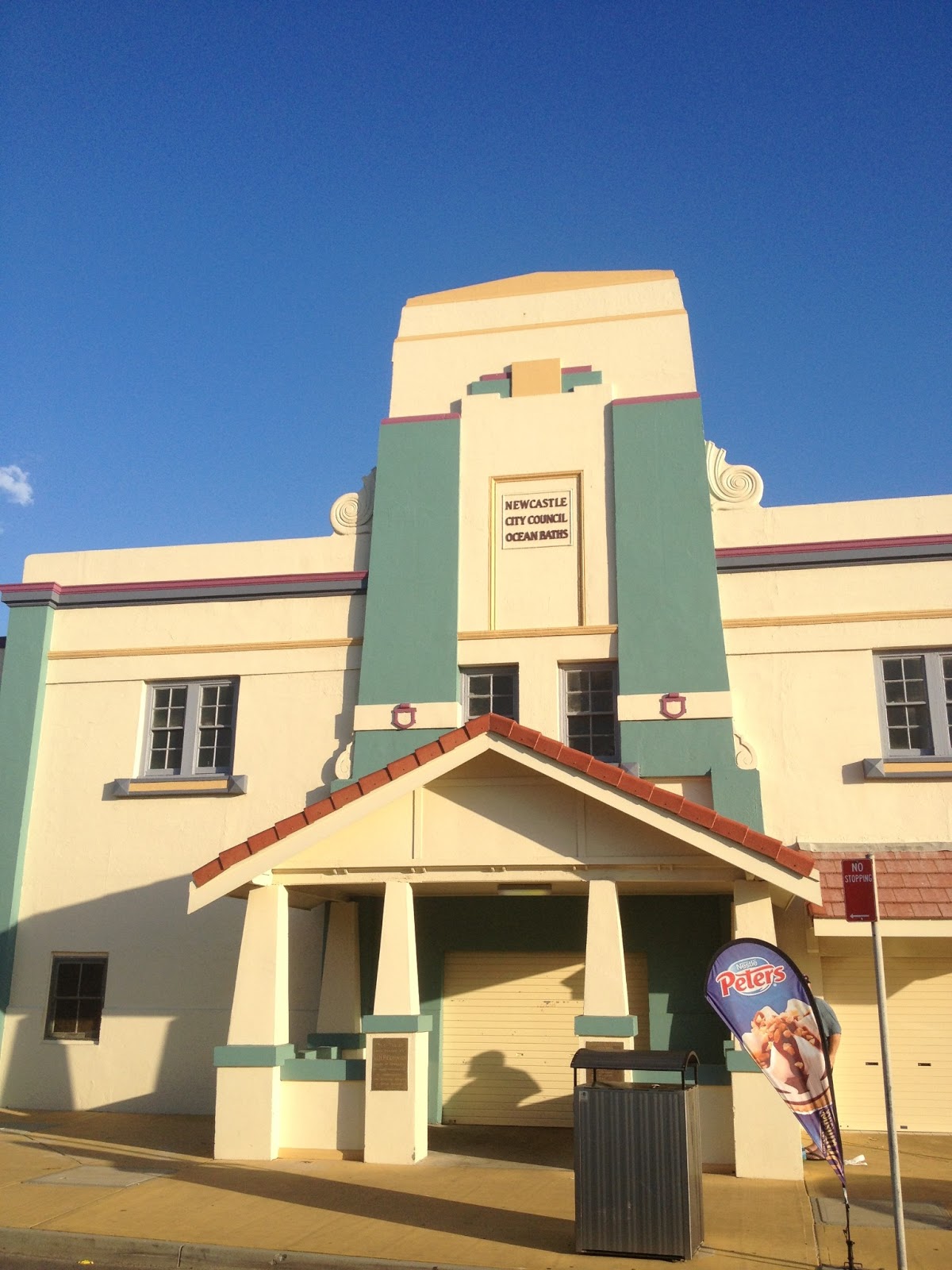
I had more ground to cover from Bar Beach if I was to do my ten thousand steps, so I sprinted up The Hill (actually, I huffed and puffed up The Hill, but you weren't there to see, so allow me a little poetic licence); waved at a couple of hang-gliders (no I didn't); strolled along The Terrace past some expensive real estate; across King Edward Park and down to Newcastle Beach.
Come to think of it, maybe this is my favourite part of Newcastle. The Newcastle Ocean Baths have been there for over 100 years and the Art Deco landmark facade is something that I hope will still be there for our great grandchildren to enjoy.
But I had no time to enjoy it today - I had a mission to complete. So from the baths I walked along Shortland Esplanade, past a few crazy rock fishermen clinging on to their existence as white water leapt over the rocks at them, trying to sweep them to oblivion (OK, more licence. It was actually a nice day and the sea was gentle - but it could have been as I described), finally to Nobbys Beach; along past the lighthouse and on to the Breakwater.
It was at the Breakwater that I took a moment to sit on the rocks and stare enigmatically out to sea, making sure of course that I didn't get in the way of the handful of Japanese visitors who seemed determined to photograph Newcastle and Stockton on the other side of the river from every imaginable angle. I was at the end of my walk for today, about five kilometres from home and if I was doing this every day for real, it would be here that I would be filling up my containers for the return journey. Take a moment to look again at the picture on the top of the Walk 4 Water website. Those water jars look as though they hold at least two or three gallons of water, probably more. That's at least 20 or 30 pounds - maybe 12 or 13 kg. How would you like to carry one of those babies under your arm full of water ever day for five or more kms for the rest of your life?
So I headed home, past the Foreshore, through town and back to Cooks Hill. I may do it again tomorrow - or maybe I'll head over to Merewether. Isn't it nice to have the choice?
Please help by visiting WALK 4 WATER and making a donation. The last time I looked the donations were just over $500 - that's enough so far to provide some of the pipes for a gravity-fed water system.
More tomorrow.

 After the leaving the Fish Markets I headed across the bridge at Cowper Street, enjoying the sight of the dragon boaters and the standing board paddlers (how do they do that?) and followed the path around past the rowing club and along the waterside. I hadn’t been in this part of the city before, and it was a wonderful surprise to come across the mangrove boardwalk through the muddy wetlands which form part of this Throsby catchment area. They are in healthy condition and I hope they can keep it that way – plastic bags and empty containers are the bane of fauna in these areas – but I won’t start on that topic or I’ll go on forever. I zigged and zagged along the boardwalk and soon found myself back in industryville as my trail came out into the road which leads back down to Port Waratah docks. This brought me soon to one of my favourite streets in Newcastle - Young Street. If ever there is a part of Newie which exemplifies the character and the history of this town it has to be Young Street, Carrington. This is a street that lives. I walked past a three year old girl, standing on the nature strip in front of her home, with her dad and a big pink plastic ball telling him in no uncertain terms to throw it properly, while Mum leaned against the porch with a cold glass of something in her hand which I thought I was nearly ready for. I walked past the old Council Chambers, the Everyman Theatre, the Fire Station and the charming St Thomas Church and at the end of the street (three pubs within walking distance of each other - wonderful) I turned right and headed back to the Fish Markets and on home. I can only imagine what Carrington was like fifty or sixty years ago - I know I would have liked it.

Day 3
Today’s destination was Merewether Baths and beyond. At 7 am I set off at my usually jaunty pace, pausing only to allow the elderly and infirm to overtake me as I strode purposefully down Parkway on my way to Bar Beach where today I would turn right instead of yesterday's left.
I confess that I spent a bit of yesterday’s walk trying to work out mentally how much those ancient looking urns in the picture below must weigh when filled with water. It’s not easy to do the four thirds π r cubed thing in your head, particularly when I'm still thinking in gallons and inches rather than metric measures. So last night when I got home I got the calculator out (no, Andrea – not the slide rule!) and assuming a diameter of about 35 cm and allowing a bit for the flat bottom, I determined those things hold about 20 litres of water – and that, friends is 20 kilograms.
Having satisfied my inner nerd, I continued on past the Bar Beach Skate Bowl, apparently the biggest and deepest in the country and site of the recent Australian Bowl Riding Championships. It was quite empty, and peering over the edge of the bowl I could understand why. I for one was quite happy to keep my distance. There would not be enough knee pads, helmets and arm guards to satisfy me I’m afraid.
 |
| Dixon Park Beach - water fountain |
There’s a nice little hill at the southern end of Bar Beach which leads to Dixon Park Beach which I bravely jogged up determined not to be outdone by the athletic-looking mothers pushing their children up the same hill in what I can only describe as un-motorised urban assault craft. I think I beat them, but they later passed me on the straight as I paused here to refuel.
The walk along this part of the coastline is known as Bather’s Way and there is no doubt that the recent upgrade has been an extremely good use of Newcastle rate payers’ money.
But the highlight of the walk to Merewether (and maybe this is my favourite part of Newcastle!) is the Merewether Ocean Baths. Built in 1935, the baths are, according to Wikipedia the largest ocean baths in the Southern Hemisphere (so take that, Rio de Janeiro and Cape Town) and while on the subjects of superlatives, the beach itself is the home of the Merewether Surf Life Saving Club, the oldest surf club in the Hunter Region.
 |
| Merewether Ocean Baths |
Today was a magnificent day to be beside the sea, and provided a perfect example of why many Novocastrians always keep their “cossies” in the car. Unfortunately, armed as I was with Walk4Water pedometer and camera phone, I was not able to take a dip – perhaps tomorrow.
I knew I need a few more steps before I could turn back so I ventured on across the rocks and some wonderful examples of the residue from the region’s 250 million year old volcanic history for another few hundred metres before turning back to make my way home.
I need more money folks. Do you know that one in three women around the world have no access to a safe toilet, threatening their health and exposing them to shame and fear? Water and sanitation aid provided to sub-Saharan Africa each year amounts to less per person than the price of a cup of coffee and yet for every single dollar invested in water and sanitation, there is an $8 return as an economic benefit through improved health outcomes, reduced costs and increased productivity.

So PLEASE, if you have not yet added your contribution to this great cause – I ask you to DO IT NOW. You can donate here.
Tomorrow I’m going to get away from the ocean for a while and head over to Carrington and the Fish Markets.
Thanks for indulging me.
Day 4
I really do love this town! I was unable to get out early this morning, so today’s Walk4Water was a twilight effort through the city and out to Carrington.
The walk from Cooks Hill to the city is always pleasant. Through the park, past the bowling club and down to Laman Street and the Art Gallery (shame about the fig trees - I’m not going to comment on that Council decision, I got into enough strife with my views on the railway line). I will say that the gallery is a wonderful place, with some very significant works and I truly hope that the good people of this town are able to prevail with their argument against any suggestion that it be relocated. I didn't dally today though – I needed to get through town and on to the Foreshore and Honeysuckle before it got too dark to take any decent photos. I love walking along the Foreshore – there is something so very special about a working harbour for an old salt like me, and the sombre blast of a ship’s siren is the most wonderful music to my ears any time of the day – even in the dead of the night.
From the western end of the Foreshore and Honeysuckle Drive my track heads north, past the entirely agreeable Albion Hotel (great selection of beers and good food), and on to the Sailing Club marina and the Fish Markets.
 |
Now I am a great fan of sailing and never refuse an opportunity to go out on a sail boat, or even sit around on one tied alongside in the marina as long as there is plenty to eat and drink – and there usually is; but the real essence of this part of Newcastle, without the slightest shadow of a doubt is the collection of fishing boats between the Cowper Street bridge and the sailing club. Ah, if only I could translate these evocative smells into something physical for you to experience!
This was a point for me to think of others trying to access water and how different it is. With your help and the help of other sponsors Walk4Water is helping women like 35 year old Sakina, who lives in Aurigo village in the Upper East region of Ghana with her two daughters. She is expecting another baby this month. She says she used to collect water more than once a day, but now she is too heavy and can only collect water once. Her culture is such that the other women will bring her water on the day of her baby’s birth only. After that she will have to collect it herself. She walks 7 km to the river. She knows the water isn’t safe to use but she has no choice.
For us, pregnancy without clean water is unimaginable and we can help. Just go to my sponsor page and pledge your support. You know how important this is!


Tomorrow I will be out of town for the day, so Day 5 will have to wait until Saturday – and no, despite the temptation, I will not be doing my walk around a golf course trying to whack a little white ball. Apart from the fact that this would probably be much more that 10,000 steps, I think that might not quite be entering into the spirit of the event. No, I’ll leave that pleasure until Sunday.
Day 5
Today was a bit of a mixed bag. I didn't think I would be able to get my ten thousand steps in since my day job required me to spend the day in Sydney - but I thought I'd give it a go and see what happened. So I put the pedometer on my belt and set off shortly after six in the morning to walk to Newcastle Station to catch the Sydney train. I thought it would be good to do the walking today with a little taste of what it might really be like to walk for water, so I made sure my backpack was well loaded with the files I needed for the day as well as my computer. I threw a bottle of water in for good measure, but I don't suppose the whole thing came to much more than four or five kilos. I was getting off lightly. I caught the 0648 train to Sydney Central which as usual at that time of the day from Newcastle Station meant that I just about had the carriage to myself.
 This would be a good moment to tell you briefly about the Newcastle to Sydney rail service. In terms of Great Railway Journeys of the World - this is not one. The Bullet Train services which operate in Japan and which are fast, clean and highly efficient are known as Shinkansen. With wonderful gallows humour the Newcastle to Sydney service is widely referred to as the "Shitkansen". I won't go into detail - Matthew Hatton describes it much more eloquently than I ever could in a piece he wrote for his website here.
As it happened my trip south was relatively peaceful and uneventful, which is more than I can say for the return journey, but that's another story.
About two and a half hours later we arrived in Hornsby where I changed to catch the local North Shore line since my destination today was in North Sydney. I got off at St Leonards having decided to walked the last two kilometres to my appointment. It was about 30 degrees Celsius and I was dressed for a formal meeting, so I was probably looking less like the elegant and debonair fellow I usually am when I arrived, but these people are good friends, and have already contributed to the Walk4Water cause, so that was OK. Many women and children in developing countries spend hours each day walking miles to collect water which is usually dirty and unsafe, but they have no alternative.
 Unlike my backpack, carrying heavy water containers is an exhausting task, which takes time and energy. It prevents women from doing vital domestic or income generating work and stops children from going to school. Mangalita Siamajele lives in Zambia and when the river bed is dry she walks miles to the waterhole carrying a water bucket on her head. She struggles to walk as she has a bad hip and the water bucket which she sometimes carries twice a day weighs 20 kg. WaterAid helps people like Mangalita to build safe water supplies.
After my meeting I walked a further kilometre or two to Waverton Station but you know, it was all down hill and, having drunk my water, the backpack was really very light. The trip to Hornsby was again uneventful. The first sign of any concern about what was to come arose when I changed at Hornsby for the Shitkansen ride north. I had about half an hours' wait for the train, and Platform 5 was looking ominously full of very determined travellers. I decided to wait at the end of the platform so that I could get into the front carriage - the so-called "quiet carriage". As the train rolled into the station my worse fears were realised. The train was full. What ever prompted me to think that catching the train from Hornsby was a good idea? I could have easily gone from Waverton to Sydney Central and caught the train from there. It would have been empty and if nothing else, I would have had a choice of where to sit.
It was a dreadful journey. If this was the quiet carriage, I shudder to imagine what the others were like. With due consideration to the New South Wales Department of Transport in general and CitiRail in particular, I will spare the details. At one point I did post a dreamy tweet that one of these days I would time my day to coincide with that mythical CountryLink train that stops only at Broadmeadow and provides succour to the weary traveller. I received a response from one of my Newcastle friends wanting to know whether this was the one that was pulled by golden unicorns.
Good humour and hearing all but gone by the time I arrived by in Newcastle, I still had the energy to walk back home ready to freshen up and wash the day away with a cold drink. As I walked in the door my pedometer was showing that I had taken 8,400 steps during the day - but I'm sorry to report that I did not have the wherewithal to turn around and make up the difference. For those of you disappointed by this, please rest in the knowledge that I was out just after sunrise this morning and my wife and I had a wonderful walk down to Bar Beach and back - no pain at all!
Thank you all for indulging my ramble over the past few days - but it is not over yet - I really would like you to donate to this cause - I can almost promise you that you won't hear from me again on this topic. Meanwhile please put your cursor right HERE and click.
Thanks again for humouring me.